Biotechnologies
- Provides solid basic preparation in various sectors of biotechnology, also useful in other life science fields.
- It has an especially favourable professor/student ratio and this enables continuous, effective training.
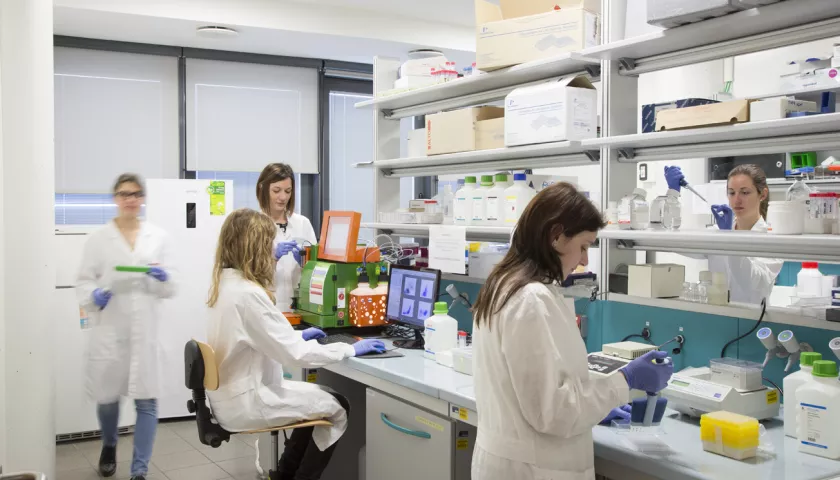
- Students are involved in various practical laboratory activities during the course and discuss an experimental thesis prepared with the supervision of one or more course professors or lecturers.
Request information about the degree program

Explore

Type Programme
Bachelor's Degree

Type of admission
Restricted access

Didactic method
In-person programme

Language
Italian

University site
Brescia

Department
Department of Molecular and Translational Medicine

Degree identification category
L-2 Biotechnologies
Study Plan
The three-year First Cycle degree course sets out the acquisition of 180 university credits overall divided into basic, distinguishing, similar, supplementary and the student’s choice of training work in addition to the internship and the work for the preparation of the final exam.
The teaching courses, integrated or single subject, include classroom lessons, exercises and laboratory work.
Useful links
PRESENTAZIONE DEL CORSO
Il giorno 5 ottobre 2026 il Presidente del Corso, Prof. Giuseppe Borsani, ha incontrato le matricole. Di seguito lemslide di presentazione.
The degree programme (CdS) in Biotechnology is designed to meet the educational objectives of Degree Class L-2, leading to the award of a degree in Biotechnology.
The programme takes three years to complete and involves the acquisition of a total of 180 university credits (CFU), divided into core, specialised, related, supplementary and elective modules, in addition to professional work placements and activities aimed at preparing students for the final examination.
Admission to the degree programme requires a secondary school leaving certificate.
Attendance at lectures is optional.
The main career prospects offered by the degree programme are: public and private analytical laboratories in the agri-food, environmental and pharmaceutical sectors; universities and other public and private research institutes and organisations; research and development centres for biotechnological products and services in the fields of healthcare, medicine, veterinary science, agri-food, bioengineering and environmental protection; Experimental Zooprophylactic Institutes; bodies responsible for drafting health or patent regulations concerning the use of biotechnological products.
Lectures are held in person in the lecture theatres and laboratories of the Medical Area, at Viale Europa 11, Brescia. Up to one-third of the teaching activities may be delivered online, excluding practical and laboratory work (as a rule, a maximum ratio of 1/3 online to 2/3 in-person for each module, with explicit indication in the syllabus, and in any case under the coordination of the Degree Programme).
Graduates in Biotechnology acquire a sound interdisciplinary grounding that enables them to work at a mid-level, including as part of a team and in work environments comprising staff with diverse backgrounds and skills.
Role within a work context:
Biotechnologists work in public and private research laboratories and in a wide range of companies within the increasingly diverse sector of production chains that utilise biological systems and/or parts thereof (e.g. biomolecules, viruses, bacteria, cells) manipulated using genetic engineering techniques. The role of the Biotechnologist is relevant in the agricultural, animal husbandry, food, chemical, medical, pharmaceutical and environmental sectors.
Skills associated with the role:
Graduates in Biotechnology possess the basic theoretical and practical knowledge which, on the one hand, enables direct entry into the world of work and, on the other, provides access to further study (Master’s degree programmes).
Biotechnologists are able to understand the fundamental issues of biotechnology in all its forms. Furthermore, they are able to identify, collect and interpret data useful for defining problems and carrying out both basic and applied research projects in the field of biotechnology. Finally, biotechnologists know how to communicate information, data and solutions to audiences with varying levels of expertise.
Career prospects:
The main career prospects for graduates in Biotechnology are:
- National Health Service facilities, hospital trusts
- Public and private specialist clinical analysis laboratories
- Experimental Zooprophylactic Institutes
- Universities and other public and private research institutes and organisations
- Research and development centres for biotechnological products in the health, medical, veterinary, agri-food and environmental protection sectors
- Biotechnology service centres in the health, medical, veterinary, agri-food and environmental protection sectors
- Bodies responsible for drafting health or patent regulations concerning the use of biotechnological products.
The Degree Programme in Biotechnology aims to prepare graduates to become professionals with a solid grounding in the biomedical and molecular fields, as well as to equip them with the skills required to utilise modern communication techniques. The decision to extend the programme’s scope beyond the biomedical-molecular sector to include the medical-veterinary and agri-food sectors, through the provision of specific modules, stems from the importance of a multidisciplinary biotechnological approach in the field of public health and the potential employment opportunities in the region. Acquiring these skills will, on the one hand, provide graduates with a foundation in biotechnology that prepares them to expand their knowledge by undertaking a Master’s degree programme and/or through continuing professional development throughout their careers; on the other hand, it will enable them to enter the biotechnology sector directly upon graduation.
Graduates in Biotechnology, within their areas of expertise, are able to:
- collaborate with professionals working in the medical and agri-food sectors, actively participating in the planning and implementation of specific biotechnological projects and applications in the fields of basic research and diagnostics, both in the biomedical and agri-food sectors;
- apply, with carefully defined levels of autonomy, biotechnological protocols in the medical, veterinary and agri-food fields, taking into account not only technical aspects but also ethical, economic and administrative considerations;
- integrate easily into relevant work environments at national and international level, possessing the necessary technical and scientific skills – including those relating to communication and information management – and being able to use the English language effectively.
In order to facilitate the acquisition of these professional skills, the curriculum of the Bachelor’s Degree Programme in Biotechnology is also characterised by its international focus. International contacts will be encouraged through the organisation of study days and in-depth seminars, the arrangement of study periods abroad in state-of-the-art biotechnology laboratories, training students to access information via digital means, and familiarising them with the practical use of the English language.
The Bachelor’s Degree Programme in Biotechnology is based at the Faculty of Medicine and Surgery. To ensure that students acquire the necessary tools for a solid grounding in biotechnology, the programme allocates a sufficient number of credits to multidisciplinary experimental laboratory activities. These practical teaching activities take place in various types of teaching laboratories (morphological, biological-molecular, cellular and bioinformatics) set up and equipped to meet the specific needs of the degree programme. The laboratories play a significant role, as it is inherent in the philosophy of the degree programme to provide graduates with practical training that enables them to enter the world of work with ease. This particular aspect of interdisciplinary practical teaching is further developed through the placement which students undertake at research and healthcare facilities within the Faculty of Medicine and Surgery and/or at public or private companies and laboratories specialising in biotechnology, including those in European and non-European countries.
The placement will provide the basis for the preparation of a written dissertation, which the student must then defend during the final examination in order to obtain the Degree in Biotechnology.
Knowledge required for admission
Admission to the Biotechnology degree programme requires knowledge of the basic scientific disciplines (mathematics, physics, chemistry, biology) and the ability to reason and comprehend, at a level of depth at least equivalent to that acquired during upper secondary school.
Admission to the Biotechnology degree programme is limited to a maximum number of students, determined each year by the relevant academic bodies. This restriction on admissions is due to the essential need for students to acquire adequate practical skills in the fields of cellular, molecular, morphological and bioinformatics methodologies. The provision of these teaching activities requires the availability of practical laboratories equipped with suitable apparatus and consumables, as well as the involvement of technical staff to supervise the practical sessions. The admission limit is commensurate with these resources, which are defined.
Students’ prior knowledge will be assessed in accordance with the procedures set out in the Degree Programme’s Academic Regulations. Students who do not pass the assessment test will be enrolled with academic debts (or additional learning requirements). These academic debts, relating to the gaps identified in the assessment, take the form of an additional workload beyond that required by the degree programme. To fulfil these academic debts, students must participate in supplementary learning activities. The aim is to ensure a sufficient and uniform level of initial preparation amongst students enrolled in the first year of the degree programme.
Should the number of applicants for the programme exceed the specified number, the assessment test will serve as a selection criterion, and only students included in the merit list will be admitted to the Biotechnology degree programme.
Admission Procedures
The number of eligible students, the timetable and the admission procedures – determined each year by a specific resolution – will be set out in the calls for applications, published on the University’s website, which will govern access to the degree programme for the academic year.
For the 2026/27 academic year, the emergency decree of the Chair of the Central Academic Council (CCS), ratified at the CCS meeting on 20 May 2026, established the use of the TOLC–B – an acronym for the CISIA (Inter-University Consortium for Integrated Access Systems) Online Test – as the selection method for students eligible to enrol in the first year of the Biotechnology degree programme.
Specifically, for the publication of the Call for Applications for admission to the Biotechnology degree programme for the 2026/27 academic year – first edition – via the TOLC–B and the subsequent application for inclusion on the relevant ranking list, it has been decided to use the following criteria:
• Admission requirements
To be eligible for the selection process – first edition – and for subsequent enrolment, candidates must hold a secondary school leaving certificate obtained in Italy or an equivalent qualification obtained abroad, by the end of the 2024/2025 academic year.
• Available places and minimum score to be included in the ranking list
Given that, for the 2026/2027 academic year, the following are eligible for admission to the Bachelor’s Degree Programme in Biotechnology:
- Italian citizens, EU citizens and non-EU citizens lawfully residing in Italy, in accordance with Article 26 of Law No. 189 of 30 July 2002
65 places
- Non-EU citizens residing abroad, within the limit of the following quota reserved for them: 2 places
In the first edition of the admissions call, the following places will be available:
28 places reserved for Italian citizens, EU citizens and non-EU citizens lawfully residing in Italy.
Candidates who have obtained an overall score of 30/50 or higher will be included in the ranking list.
In the event of a tie in the overall score, the following criteria will be taken into account:
- priority, in descending order, based on the score obtained by the candidate in the questions relating to Biology and Chemistry, respectively;
- in the event of a further tie, the candidate who is younger according to their date of birth will be given priority.
Any remaining places from this first intake will be made available in the second intake.
The Call for Applications – Second Intake will offer:
37 places reserved for Italian citizens, EU citizens and non-EU citizens lawfully resident in Italy + 2 places available for non-EU citizens resident abroad.
Applications for the second intake will result in the creation of a second merit-based ranking list.
In order to facilitate access to the Biotechnology degree programme for a greater number of students, the minimum score required to be included in the second merit list may differ from that required for the first merit list and will also be determined on the basis of the scores obtained by candidates enrolled in the first intake.
Should the two places made available to non-EU citizens residing abroad not be filled in the second round – even following any reallocation procedures provided for by the Ministry of Universities – they will not be made available to the second-round merit list for EU and equivalent candidates.
• Dates
The TOLC-B can be taken at the University of Brescia on the dates indicated at the following link https://www.unibs.it/en/education/enrolling/admission-degree-programs/tolc or at other CISIA test centres listed on the website https://testcisia.it/calendario.php?tolc=biologia.
• Test content
The TOLC-B test consists of 4 thematic sections with 50 multiple-choice questions (5 possible answers, one of which is correct).
BASIC MATHEMATICS 20 QUESTIONS
BIOLOGY 10 QUESTIONS
PHYSICS 10 QUESTIONS
CHEMISTRY 10 QUESTIONS
TOTAL 50 QUESTIONS
The test lasts 110 minutes and marks will be awarded as follows:
CORRECT ANSWER 1 POINT
INCORRECT ANSWER -0.25 POINTS
NO ANSWER GIVEN 0 POINTS
At the end of the TOLC-B, there is a section comprising 30 questions to test knowledge of the English language (time allowed: 15 minutes).
In the marking of the English language test, there is no penalty for incorrect answers, and the score is determined by awarding 1 mark for each correct answer and 0 marks for incorrect or unanswered questions.
CORRECT ANSWER 1 POINT
INCORRECT OR UNANSWERED ANSWER 0 POINTS
The score for the English test is NOT taken into account when compiling the merit list.
The overall merit ranking – 1st edition – reserved for EU and equivalent candidates – is drawn up on the basis of the overall score, in descending order, obtained in the TOLC-B taken between January 2025 and July 2026, excluding the score obtained in the English language section, if taken.
Candidates successfully placed on the merit list who did not achieve at least 30 per cent of the maximum mark for each of the Biology, Chemistry and Physics sections in the admission test will be assigned educational requirements (OFA). To fulfil these requirements, the student must complete the specific educational activities established annually by the CCS or attend remedial courses organised by the University.
First-year students will not be permitted to sit the following assessed examinations until they have fulfilled the OFA in Biology:
General and Cellular Biology (6 CFU, SSD: BIOS-10/A)
Genetics and Genomics (Integrated course comprising the modules General Genetics and Elements of Human Genetics, 3 CFU, SSD: BIOS-10/A, and Molecular Genetics and Genomics, 6 CFU, SSD: BIOS-14/A).
First-year students, until they have passed the OFA in Chemistry, will not be permitted to sit the following assessment:
General, Inorganic and Organic Chemistry (integrated course comprising the modules General and Inorganic Chemistry, 6 CFU, SSD: CHEM-03/A and Organic Chemistry, 6 CFU, SSD: CHEM-05/A).
First-year students will not be permitted to sit the following assessment until they have fulfilled the OFA in Physics:
Mathematics and Physics (an integrated course comprising the modules Applied Physics, 6 CFU, SSD: PHYS-06/A, and Mathematics, 6 CFU, SSD: MATH-03/A).
Students who do not fulfil the OFA requirements by the end of their first year of study will not be able to enrol in the second year of the programme, but will remain enrolled in the first year, as surplus students, with the status of repeat students.
Information on the various administrative procedures concerning enrolment, fees and services can be found on the University website.
Initial and ongoing student guidance
The degree programme participates in the initial and ongoing student guidance initiatives organised at both the macro-area and University levels, which are detailed on the dedicated page of the University portal; this page also provides access to the specific initiatives for each macro-area. These initiatives are coordinated by a working group comprising the Rector’s Representative for Guidance, the Departmental Guidance Representatives and staff from a dedicated organisational unit. The design and delivery of the guidance activities, developed by the specific organisational unit, are certified to the UNI EN ISO 9001:2015 standard. Regular activities, news and the latest initiatives can be found on the dedicated page of the University website.
Tutoring
Tutoring initiatives are organised at University level in accordance with the annual tutoring plan, which is drawn up each year by the University Commission for Tutoring – chaired by the Rector’s Delegate for Teaching – and approved by the Academic Senate. The Tutoring Service contributes to ongoing student guidance with the aim of ensuring students progress smoothly through their studies and identifying the critical issues that contribute to drop-out rates. The administrative management of the student tutoring service is certified to the UNI EN ISO 9001:2015 standard and is provided as part of the services supporting the right to education by a dedicated organisational unit.
Features of the final examination
The final examination for the award of the degree in Biotechnology consists of the defence of a written thesis, drafted by the student, relating to the practical experience gained during their work placement.
The written thesis serves to complete a programme of practical activities that began in the shared laboratories and concludes with an individual placement at a research laboratory.
The thesis will normally focus on the application of methodologies in various fields of biotechnology and may be written in either Italian or English. The thesis must be defended before a panel of lecturers from the degree programme, who will award an overall mark out of 110, with honours where applicable, taking into account the student’s entire course of study.
Procedure for the final examination
The final examination for the award of the Degree in Biotechnology consists of the defence, before an examination board, of a methodological or experimental thesis written in Italian or English (in the latter case, the student must include a summary in Italian in the final thesis file), developed and drafted by the student in an original manner, under the supervision of a lecturer, and on a topic falling within one of the disciplines listed in the programme of study. The thesis defence will take place in Italian. Where the student provides documented justification, the Chair of the Degree Programme may authorise the thesis defence to be conducted in English.
The degree thesis, the contents of which are presented during a public defence, enables the candidate to demonstrate mastery of methodology and the ability to tackle problems independently and critically.
Admission to the final examination requires the acquisition of all the ECTS credits specified in the study regulations, with the exception of the 4 credits awarded for the examination itself.
However, only students who have certified their compliance with the teaching assessment procedures may be admitted to the final examination.
Degree examination sessions take place in accordance with the annually approved calendar (usually in July, October and March). Any extraordinary degree examination sessions must be authorised by the relevant University bodies.
The thesis topic is assigned by the University placement tutor, who will act as the thesis supervisor.
Upon assigning the thesis topic, the supervisor may appoint a co-supervisor, who may be a lecturer on the degree programme, a tenured academic at the University or at other Italian or foreign universities, or a qualified expert from within or outside the University. The role of Co-supervisor may also be fulfilled by a subject specialist for a module within the degree programme or, in the case of an internship outside the University, by the tutor from the partner organisation.
The allocation of a degree thesis may under no circumstances be conditional upon achieving a particular average mark in examinations.
To be admitted to the final examination, the student concerned must:
a) at least six months before the start date of the examination session in which they intend to sit the degree examination, enter the title of the thesis on their personal ‘Degree Award’ page, which must subsequently be approved by the Supervisor;
b) at least thirty days before the start date of the examination session in which they intend to sit the degree examination, submit an application for admission to the degree examination via the designated online procedure, stating the final title of the thesis and strictly following the additional instructions provided on the website;
c) at least fifteen days before the final examination takes place, have passed all the examinations required by the study programme.
The Biotechnology degree programme has established the role of Co-supervisor for the final degree examination. This is a member of the Degree Examination Board whose task is to analyse the thesis work carried out and to enable the graduate to demonstrate mastery of the specific subject area. The graduate must submit a copy of the thesis (in hard copy or electronic format) to the Co-supervisor at least one week before the final examination takes place.
The Examination Board for the final examination is constituted and operates in accordance with the University’s Academic Regulations.
The Chair of the Board is responsible for ensuring that the examination is conducted in a fully proper manner and that the minutes are drawn up. At the end of the defence, the Examination Board deliberates in private to determine the final mark.
Only members of the Board who have attended the defence may take part in the deliberations. Decisions are taken by majority vote. In the event of a tie, the Chair’s vote shall prevail. The final mark is expressed out of 110. The examination is passed with a mark of at least sixty-six out of 110 (66/110).
The following elements contribute to determining the degree mark, expressed out of 110:
a) the average mark derived from the curriculum:
1. arithmetic mean, converted to out of 110;
2. additional marks for honours: 0.2 marks per honour, up to a maximum of 2 marks;
3. marks for the duration of the degree programme: 2 marks for graduates completing the programme within the standard duration;
4. participation in international exchange programmes: 0.2 marks per month, up to a maximum of 1 mark.
The overall mark referred to in point (a) is rounded up or down to the nearest whole number. The Degree Examination Board also awards a maximum of 8 points based on the quality of the presentation, mastery of the subject matter and the overall assessment expressed by the Thesis Supervisor and Co-Supervisor of the thesis.
Honours are awarded on the recommendation of the Thesis Supervisor and with the unanimous approval of the Board.
The use of any teaching aids (slides, transparencies, digital presentations, etc.) is intended to assist the graduate in facilitating a better understanding of the presentation; therefore, such aids must not contain purely discursive sections, but should predominantly consist of diagrams, graphs, figures, tables and videos.
At the end of the deliberations, the Chair publicly announces the result of the final examination and the corresponding mark, and finally records the results of the degree examinations in the minutes.
Student Advisory Service
Student representatives
Degree programme committees
The teaching regulations specify the organisational aspects of the course, according to the corresponding system, respecting the freedom of teaching and the rights-duties of professors/lecturers and students.
Teaching regulations A.Y. 2026/2027 (IT)
Teaching regulations A.Y. 2025/2026 (IT)
Art. 5 - Teaching regulations A.Y. 2024/2025 (IT)
Teaching regulations A.Y. 2024/2025 (IT)
CENTRES AND CONTACTS
Department of Molecular and Translational Medicine (DMMT)
Viale Europa 11, 25123 Brescia BS
For information on educational activities
Servizi didattici (Educational Services)
U.O.C. Corsi scientifici area medica (Medical area scientific courses)
Viale Europa 11, 25123 Brescia
For information on enrolments, fees, transfers, certificates and career
UOCC Segreterie studenti (Student Administration)
Via San Faustino 74/b, 25121 Brescia