School of Dentistry
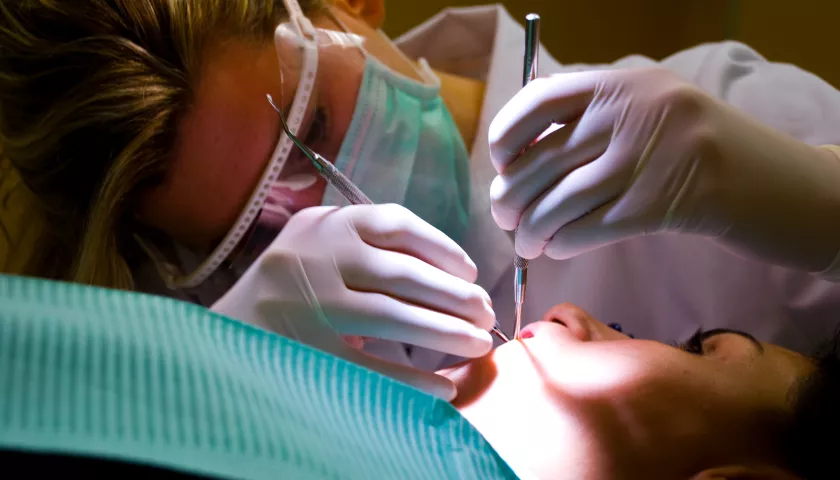
The Dentistry and Prosthetic Dentistry course trains students to be able to formulate diagnoses and establish treatment of congenital and acquired diseases and disorders of the teeth, mouth, jaws and the relative tissues and also dental prevention and rehabilitation.
Dentists can prescribe all the medications necessary for the exercise of their profession.
Request information about the degree program

Explore

Type Programme
Single-Cycle Master’s Degree

Type of admission
Nationally planned access

Didactic method
In-person programme

Language
Italian, English (sixth year)

University site
Brescia

Department
Department of Medical and Surgical Specialties, Radiological Sciences and Public Health

Degree identification category
LM-46 - Dentistry
Study Plan
Teaching is in modules and includes frontal lessons, classroom exercises or laboratory exercises. Professional laboratories and clinical internships favour the application of knowledge learnt during the course to the clinical environment.
Useful links
The specific mission of the Single-Cycle Master’s Degree Course in Dentistry and Dental Prosthetics (Degree Course or CCLOPD), established within the Department of Medical and Surgical Specialties, Radiological Sciences and Public Health (DSMC) with the contribution of all Departments of the Medical Area, is to train a dentist who, in addition to possessing the basic knowledge necessary for the practice of the medical profession, has a multidisciplinary and integrated understanding of the most common health and disease issues. Particular emphasis is placed on the community and the local area, also in relation to the living and working environment, knowledge of the international healthcare context, disease prevention, and health promotion, as well as a humanistic culture in its medically relevant aspects, with attention to bioethical considerations.
In particular, the Course aims to train professionals equipped with the scientific foundations and the theoretical and practical preparation required to practice the medical profession, as well as with the methodology for lifelong learning. During their training, students must acquire a level of professional, decision-making, and operational autonomy sufficient to address the health problems of both healthy and ill individuals, in relation to the chemical, physical, biological, and social environment surrounding them, also in line with the University’s mission to promote the “health and well-being of individuals within their environment.” This vocation, interpreted across the various disciplinary areas of the University, is reflected in specific projects in several scientific fields, including medical and biological sciences.
The final objective is to achieve sufficient skills and experience, combined with the ability for self-assessment, to responsibly address and resolve priority health issues from preventive, diagnostic, prognostic, therapeutic, and rehabilitative perspectives. In addition, graduates must develop an integrated approach to at-risk individuals and patients, critically evaluating both clinical aspects and the relational, educational, social, and ethical factors involved in the prevention, diagnosis, and treatment of disease, as well as in rehabilitation and in the recovery of the highest possible level of psychophysical well-being.
Dentistry and Stomatologist
Function in a work context:
The graduate can perform the professional role and related functions in the indicated employment areas:
Dentist
Skills associated with the function:
The graduate can perform the professional role and related functions:
- carries out activities relating to the prevention, diagnosis and treatment of diseases and congenital and acquired anomalies of the teeth, mouth, jawbones, temporomandibular joints and related tissues;
- deals with dental rehabilitation, prescribing all medications and devices necessary for the exercise of the profession;
- designs, verifies and applies dental medical devices, whose suitability they check.
Career opportunities:
Graduates in Dentistry and Dental Prosthetics have career opportunities within the field of the self-employed dental profession.
They may carry out, according to current regulations, first- and second-level managerial activities within the National Health Service.
OBJECTIVES AND DESCRIPTION OF THE EDUCATIONAL PATH
The general objectives and the structure of the study plan described below refer to the contents of the scheme of the Ministerial Decree New Degree Classes – Regulation of Master’s Degree Courses (LM‑46, Class of Master’s Degrees in Dentistry and Dental Prosthetics), which defines Master’s Degree Courses in compliance with the directives of the European Union and to the Academic Regulations of the University of Brescia.
The Degree Course aims to allow the student to know and understand the fundamental elements of etiology, pathogenesis, symptomatology, diagnostics and therapy of the main diseases and congenital and acquired anomalies of the teeth, oral cavity, jawbones, temporomandibular joints and related tissues, as well as dental rehabilitation.
The acquisition of knowledge and understanding of these elements allows the student the ability to use them to plan an adequate and specific treatment plan for each patient.
The curriculum provides for 360 University Educational Credits (CFU) over 6 years and, normally, 60 CFU per year.
The distribution of the 360 credits is determined in compliance with the conditions set out in the annexes of the decree, which establishes the credits to be assigned to disciplinary fields including educational activities essential for the training of the Dentist.
The university educational credit (CFU), corresponding to 25 hours of average student workload, and the ratio between CFU hours of lectures/exercises/laboratory and CFU hours of professional training internship activities are defined in the guidelines of the University of Brescia and in the teaching regulations of the course.
The remaining portion of the educational credit is available to the student for individual study. The holders of professional training courses are responsible for the related internship.
For each internship, an evaluation must be carried out which the lecturer will take into account for the final exam grade. The pathophysiological and clinical knowledge of general medicine and dentistry acquired through the educational activities included in the curriculum and the practical clinical activities determine and define the professional profile of the Dentist operating in the countries of the European Union.
At the end of the six years, the graduate in Dentistry and Dental Prosthetics has acquired the knowledge and technical skills to enter professionally into the dental field both in the private and public sectors. The graduate has also developed the foundations and learning skills necessary to undertake specialist studies.
Graduates of the class must be able to use fluently, both in written and oral form, at least one language of the European Union in addition to Italian, also with reference to disciplinary terminology.
Pursuant to articles 1 and 3 of Law no. 163 of November 8, 2021, the final exam for obtaining the single-cycle Master’s Degree in Dentistry and Dental Prosthetics - class LM‑46 qualifies for the practice of the profession of dentist. For this purpose, the final exam includes a Practical Assessment Test (PPV) of the professional skills acquired through a Practical‑Evaluative Internship (TPV) within the course of study, aimed at verifying the candidate’s level of practical preparation for professional qualification, which precedes the discussion of the degree thesis.
The PPV is organized through the discussion by the student of 3 multidisciplinary clinical cases treated as first operator during the TPV, involving multidisciplinary treatment plans with performances relating to most of the disciplines covered by the TPV, according to the procedures identified by the protocol drafted by the Permanent Conference of Presidents of Degree Courses in Dentistry and Dental Prosthetics, in agreement with the National Register of Dentists Commission. For the purpose of passing the PPV, students receive a suitability assessment after which they may proceed to the discussion of the degree thesis.
Graduates of the class must achieve the competencies required by the specific professional profile.
The graduate in Dentistry and Dental Prosthetics carries out activities concerning the prevention, diagnosis and therapy of diseases and congenital and acquired anomalies of the teeth, mouth, jawbones, temporomandibular joints and related tissues, as well as dental rehabilitation, prescribing all medications and devices necessary for the exercise of the profession.
They possess a level of professional, cultural, decision-making and operational autonomy that allows continuous updating, having followed a training path characterized by a holistic approach to oral health problems of both healthy and ill individuals, also in relation to the physical and social environment surrounding them.
In general terms, the first three years are aimed at the study of basic educational activities designed to provide students with knowledge of the foundations of the structural organization and vital functions of the human body and include courses addressing issues related to the doctor‑patient relationship and understanding the principles underlying scientific methodology.
The student learns the method to approach the patient with oral‑dental problems.
The following three years include the study of disciplines of medical, surgical and specialist interest in relation to clinical issues related to odontostomatological diseases. These educational activities take place concurrently with the study of dental disciplines and the professional clinical internship.
The theoretical courses and clinical internships in oral pathology, restorative dentistry, endodontics, oral surgery, periodontology, orthodontics, pediatric dentistry and prosthetics, while developing different skills, pursue the common objective of developing abilities and experience to address and solve oral health problems from preventive, diagnostic, prognostic, therapeutic and rehabilitative perspectives, also in compliance with medical‑legal and ethical regulations in force in Italy and in European Union countries.
In the fifth year, a course in maxillofacial pathology and therapy and a course in implantology are introduced, which, like the previous ones, are given a comprehensive approach to patient treatment.
The sixth year includes professionalizing educational activities aimed at patient care with odontostomatological problems, particularly through clinical internship activities.
Particular importance is given to the professionalizing training activity of the TPV preparatory to obtaining the qualifying academic title. Within the 90 CFU to be obtained throughout the entire course of study and allocated to professional training activities, 30 CFU are dedicated to the TPV within the course of study, which includes carrying out, as first operator, practical activities in the preventive, diagnostic and therapeutic fields of odontostomatological diseases, relating to the disciplines of oral surgery, restorative dentistry, endodontics, implantology, pathology and oral medicine, pediatric dentistry, special dentistry, orthodontics, periodontology and prosthetics, as regulated by a specific protocol drafted by the Permanent Conference of Presidents of Degree Courses in Dentistry and Dental Prosthetics, in agreement with the National Register of Dentists Commission.
For each CFU equal to 25 hours allocated to the TPV, at least 20 hours correspond to professional training activities as first operator; the remaining 5 hours may be dedicated to individual study or other professional training activities.
The clinical sessions in oral pathology and medicine, preventive and community dentistry, restorative dentistry and endodontics, oral surgery, periodontology, orthodontics, gnathology, pediatric dentistry and prosthetics continue and integrate the skills developed in the different clinical areas in previous years, also emphasizing the relationships between systemic pathology and the oral cavity.
The CFU relating to the TPV can only be acquired through activities carried out as first operator, under the direct supervision of a tutor lecturer, at university facilities or within the National Health Service under agreement. Pursuant to art. 2, paragraph 9 of Ministerial Decree no. 653 of 5‑7‑2022, TPV credits are acquired in the sixth year of the course and a share not exceeding 30 percent of the total may be acquired in the fifth year.
Expected learning outcomes
The expected learning outcomes are what a student must know, be able to use and demonstrate at the end of each segment of the educational path undertaken.
The learning outcomes are established by the Degree Course in coherence with the competencies required by training demand and are structured in a progression that enables the student to successfully achieve the requirements set by external training demand.
The study plan consists of teaching modules organized to achieve objectives of building knowledge and skills. Each module presupposes a certain amount of previously acquired knowledge or qualifications obtained earlier.
For each learning area, which groups teaching modules according to their common objectives, the knowledge and skills that that area generally aims to achieve are described. It is then possible to open all the sheets where each teaching module sets out in detail its own specific learning outcomes that contribute to the overall area objective.
Finally, the characteristics of the work to be developed for the degree thesis are described, namely the final project that the student must undertake in order to complete their training by demonstrating that they have achieved the required level of autonomy.
Knowledge required for access
Access to the single‑cycle Master’s Degree in Dentistry and Dental Prosthetics is subject to possession of an upper secondary school diploma or an equivalent foreign qualification recognized as suitable in accordance with current regulations.
The initial knowledge required is that provided in upper secondary school programs relating to the subjects of biology, chemistry, physics and mathematics, as defined by the National Guidelines for High Schools and by the guidelines for Technical and Professional Institutes.
The methods of access to the Master’s Degree Course in Dentistry and Dental Prosthetics following a filtering semester are defined by a specific provision of the Ministry of University and Research, in compliance with current regulations.
Admission procedures
Pursuant to the provisions of Law no. 26 of March 14, 2025 and Legislative Decree no. 71 of May 15, 2025, for the academic year 2025‑2026, the admission procedures to the single‑cycle Master’s Degree Course in Dentistry and Dental Prosthetics include:
- free enrollment in the first semester (filtering semester) of the single‑cycle Master’s Degree Course in Dentistry and Dental Prosthetics;
- enrollment in the filtering semester allowed up to a maximum of three times;
- simultaneous and free enrollment in another degree course or Master’s Degree course, including in excess of available places and at different universities, in the biomedical, health and pharmaceutical fields, in degree courses defined by Ministerial Decree no. 418 of May 30, 2025;
- compulsory attendance, during the filtering semester, of courses in the core disciplines identified by Ministerial Decree no. 418 of May 30, 2025, in the following subjects, each assigned 6 university credits (CFU): a) Chemistry and preparatory biochemistry; b) Physics; c) Biology, with uniform and nationally coordinated teaching programs to ensure harmonization of study plans;
- admission to the second semester of the single‑cycle Master’s Degree Course in Dentistry and Dental Prosthetics, subject to obtaining all the CFU required for the exams of the filtering semester and placement in a suitable position in the national merit ranking, drawn up by the Ministry on the basis of the score achieved in the filtering semester exams, according to the procedures defined by Ministerial Decree no. 418 of May 30, 2025;
- the exams related to the courses included in the filtering semester are carried out at national level and with uniform assessment methods, as defined by Ministerial Decree no. 418 of May 30, 2025; each exam consists of thirty‑one questions, of which fifteen are multiple choice and sixteen are completion‑type questions, as provided for in Annex 2 of Ministerial Decree no. 418 of May 30, 2025;
- in the event of admission to the second semester, each student will be enrolled in one of the indicated university locations, according to the order of preference expressed at the time of enrollment, or in another location, based on the availability of unassigned places. The criteria for the formation of the national merit ranking, without prejudice to the provisions of Article 39, paragraph 2, of Legislative Decree no. 286 of July 25, 1998, and the methods for assigning university locations are those defined by Ministerial Decree no. 418 of May 30, 2025.
Orientation on entry
The Degree Course participates in orientation initiatives on entry that are managed both at the macro‑area level and at the University level and are illustrated on the dedicated page of the University portal, from which it is also possible to access specific initiatives for the macro areas. The initiatives are coordinated by a working group consisting of the Rector’s Delegate for orientation, the Department Delegates for orientation, and the staff of a dedicated organizational unit (U.O.C. Orientation). The design and delivery of orientation activities, developed by the U.O.C., are certified according to the UNI EN ISO 9001:2015 standard.
The Degree Course participates in the orientation and tutoring project MOOD (Med Odonto Orienta Domain Project - MOOD), already funded for 2023‑25 by the MUR. This is a joint initiative of the Permanent Conferences of the Presidents of Master’s Degree Courses in Medicine and Surgery and the Presidents of Degree Courses in Dentistry and Dental Prosthetics; it involves 40 Italian locations (including the University of Brescia) and aims to develop a uniform and homogeneous orientation path on entry across the Italian territory to (i) reduce disparities in training courses for admission tests to CLMMC and CLMOPD (socioeconomic, territorial, digital…) and (ii) strengthen school‑university interaction. In synergy with all participating universities, orientation activities for enrollment in CLMMC and CLMOPD will be implemented uniformly and equitably for all students involved. The project includes the organization of elective training activities, organized on a digital platform, in an innovative way that allows active interaction of the students involved. In addition, experiential activities will be offered through simulation laboratory practices – micro‑internships, micro‑immersive laboratory activities for upper secondary school students.
Orientation initiatives are carried out to ensure full accessibility for all students, and a service for students with disabilities is available.
Ordinary activities, news and updated initiatives can be consulted on the dedicated page
Orientation
In‑course orientation
Orientation and in‑course tutoring initiatives are organized at the University level and described on the portal according to the annual tutoring plan, defined each year by the University Tutoring Commission, chaired by the Rector’s Delegate for teaching and approved by the Academic Senate.
The tutoring service contributes to in‑course orientation with the aim of increasing the regularity of academic careers and identifying the critical issues that contribute to student dropout.
The administrative management of the student tutoring service is certified according to the UNI EN ISO 9001:2015 standard and is ensured, within the right‑to‑study services, by a dedicated organizational unit.
The Degree Course in Dentistry and Dental Prosthetics participates in the MOOD orientation and tutoring project (Med Odonto Orienta Domain Project - MOOD), already funded for 2023‑25 by the MUR. This is a joint initiative of the Permanent Conferences of the Presidents of Master’s Degree Courses in Medicine and Surgery and the Presidents of Degree Courses in Dentistry and Dental Prosthetics; it involves 40 Italian locations (including the University of Brescia) and aims to develop a uniform and homogeneous orientation and in‑course tutoring path across the Italian territory to facilitate progression in the study path and reduce hardship and dropout through peer‑to‑peer tutoring activities, recovery of OFA, career progression and counteracting hardship and isolation of university students, experiential activities through simulation laboratory practices – micro‑internships, micro‑immersive laboratory activities for Degree Course students, and self‑assessment and remedial activities.
Characteristics of the final examination
To be admitted to take the degree exam, the student must have attended all courses and passed the related examinations.
The degree is awarded upon passing a final examination, the modalities of which are governed by the teaching regulations of the degree course, in compliance with the University Teaching Regulations.
Pursuant to articles 1 and 3 of Law no. 163 of November 8, 2021, the final exam for obtaining the single‑cycle Master’s Degree in Dentistry and Dental Prosthetics - class LM‑46 qualifies for the practice of the profession of dentist. For this purpose, the aforementioned final exam includes the completion of a Practical Assessment Test (PPV) of the professional skills acquired through a Practical‑Evaluative Internship (TPV) within the course of study, aimed at verifying the candidate’s level of practical preparation for professional qualification, which precedes the discussion of the degree thesis.
The PPV is organized through the discussion by the student of 3 multidisciplinary clinical cases treated as first operator during the TPV, which involve multidisciplinary treatment plans with performances relating to most of the disciplines covered by the TPV, according to the procedures identified by the protocol drafted by the Permanent Conference of Presidents of Degree Courses in Dentistry and Dental Prosthetics, in agreement with the National Register of Dentists Commission.
For the purpose of passing the PPV, students obtain a suitability assessment following which they may proceed to the discussion of the degree thesis.
For the attainment of the Master’s Degree, the presentation of a thesis prepared in an original manner by the student under the guidance of a supervisor is therefore required.
The entire degree committee acts as co‑reviewer during the discussion, otherwise the role of co‑supervisor may be предусмотрed.
The determination of the final grade takes place according to the procedures established by the Council of the teaching structure in line with the regulations provided by the University.
Modalities of carrying out the final examination
The degree is awarded upon passing a final examination, the modalities of which are governed by the teaching regulations of the degree course, in compliance with the University Teaching Regulations.
Pursuant to articles 1 and 3 of Law no. 163 of November 8, 2021, the final exam for obtaining the single‑cycle Master’s Degree in Dentistry and Dental Prosthetics qualifies for the practice of the profession of dentist.
For this purpose, the aforementioned final exam includes the completion of a Practical Assessment Test (PPV) of the professional skills acquired through a Practical‑Evaluative Internship (TPV) within the course of study, aimed at verifying the candidate’s level of practical preparation for professional qualification, which precedes the discussion of the degree thesis.
The PPV is organized through the discussion by the student of 3 multidisciplinary clinical cases treated as first operator during the TPV, which involve multidisciplinary treatment plans with performances relating to most of the disciplines covered by the TPV, according to the procedures identified by the protocol drafted by the Permanent Conference of Presidents of Degree Courses in Dentistry and Dental Prosthetics, in agreement with the National Register of Dentists Commission.
For the purpose of passing the PPV, students obtain a suitability assessment following which they may proceed to the discussion of the degree thesis.
The degree thesis, the contents of which are presented during a public defense, may be written in Italian or English, is prepared and written by the student in an original manner, under the guidance of a lecturer and on a topic falling within one of the disciplines included in the study plan.
The degree thesis, in which the student must demonstrate mastery of method and the ability to address problems autonomously and critically, may be compilative or research‑based.
Graduation sessions are held according to the calendar approved annually.
The thesis topic may be assigned, upon request of the student concerned, by a tenured lecturer or by a researcher, including fixed‑term, who is responsible for a course. At the time of assigning the thesis topic, the supervisor also indicates the lecturer, researcher or subject expert who will act as co‑supervisor.
The assignment of the degree thesis cannot in any way be conditioned on the possession of a particular grade average in examinations.
To be admitted to the final examination, the interested student must follow the online procedures respecting the following deadlines:
a) at least 6 months before the starting date of the session in which they intend to take the degree exam, submit the thesis title and the name of the supervisor;
b) at least thirty days before the starting date of the session in which they intend to take the degree exam, submit the graduation application;
c) at least ten days before the final examination:
- pass all the exams required by the study plan.
Student Advisory Service
Student representatives
Degree programme committees
The teaching regulations specify the organisational aspects of the course, in accordance with the corresponding system, respecting freedom of teaching and the rights-duties of professors/lecturers and students.
CONTACTS
For information on educational activities
Segreteria didattica del Corso di laurea (Educational Services)
Viale Europa 11, 25123 Brescia
For information on enrolments, fees, transfers, certificates and career
UOCC Segreterie studenti (Student Administration)
Via San Faustino 74/b, 25121 Brescia