Medical Biotechnology
- The range of courses focuses on the training of professionals with transverse, multi-disciplinary skills. Extensive space is given to the ‘-omics’ sciences and nano/biotechnologies applied to diagnostics, innovative pharmacological treatments and regenerative medicine.
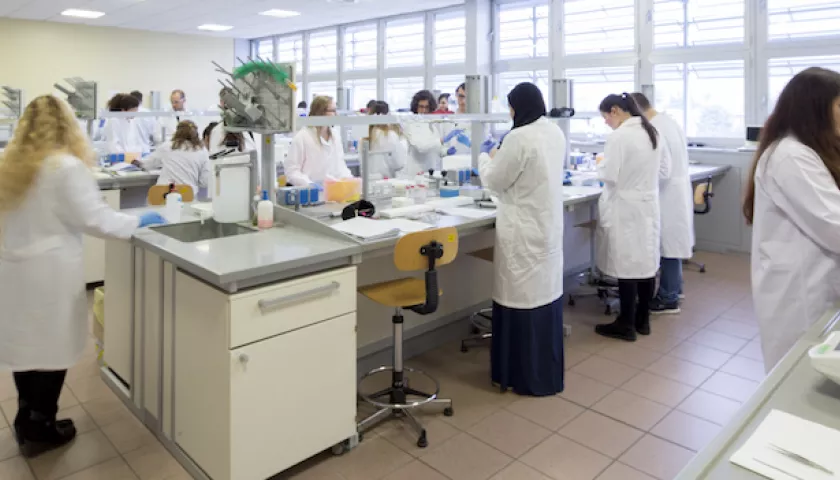
- Students go to Italian and foreign research laboratories from the first year and can do training work placements in leading companies in the biomedical sector under the guidance of a course lecturer or professor.
Blended teaching mode.
Request information about the degree program

Explore

Type Programme
Master's Degree

Type of admission
Restricted access

Didactic method
Blended

Language
Italian

University site
Brescia

Department
Department of Molecular and Translational Medicine

Degree identification category
LM-9 Pharmaceutical, Veterinary And Medical Biotechnologies
Study Plan
The Second Cycle degree course envisages the acquisition of 120 university credits overall, divided into typifying, similar, supplementary and the student’s choice of training work in addition to the internship and the work for the preparation of the final exam.
The teaching courses, integrated or single subject, include traditional lessons and classroom or laboratory exercises.
Based on Interministerial Decree dated 28 June 2011, the equivalence of Second Cycle degrees of class LM-9 Medical, veterinary and pharmaceutical biotechnologies to Second Cycle degrees in the class LM-6 Biology is recognised for the purpose of participation in public competitions in the medical-healthcare sphere.
Useful links
The Master’s degree programme in Medical Biotechnology is designed to meet the educational objectives of the LM-9 category, leading to the award of a Master’s degree in Medical Biotechnology.
The programme spans two years and requires the accumulation of a total of 120 credits (CFU), divided into core, specialised, related, supplementary and elective modules, in addition to professional placement activities and activities aimed at preparing for the final examination.
Admission to the degree programme requires a first-level (three-year) degree providing knowledge consistent with the disciplinary areas of the Master’s degree programme.
Attendance at lectures is optional.
The programme is delivered via a blended learning approach in Italian and comprises both face-to-face and distance learning activities.
The main career prospects offered by the Master’s Degree programme are:
National Health Service facilities, hospital trusts; public and private clinical analysis laboratories; experimental zooprophylactic institutes; universities and other public and private research institutes and bodies; Research and development centres for biotechnological products in the health, medical, veterinary, agri-food and environmental protection sectors; bodies responsible
for drafting health or patent regulations concerning the use of biotechnological products in the fields of manufacturing, services and the professions.
Graduates with a Master’s degree in Medical Biotechnology will be able to work responsibly and independently in these professional settings. The programme offers in-depth study of aspects related to molecular and regenerative medicine.
The qualification obtained provides access to third-cycle university programmes, including PhD programmes, medical specialisation schools (access to which is restricted to graduates holding a qualification other than a Master’s degree in Medicine and Surgery) and Master’s programmes. The National Order of Biologists registers graduates with a Master’s degree in Medical Biotechnology on its registers.
Name of the professional role: Medical Biotechnologist
Role within a workplace
The role of a graduate in medical biotechnology within a workplace is multidisciplinary and spans various areas of research and development. This professional is primarily responsible for designing and implementing studies aimed at discovering new therapies and diagnostic tools, using advanced techniques in genetic engineering and cell biology. They work in research laboratories, hospitals, and pharmaceutical and biotechnology companies, where they collaborate with interdisciplinary teams of scientists,
doctors and engineers.
One of the key aspects of their work is conducting scientific experiments, from sample preparation to data analysis, whilst ensuring compliance with safety regulations and good laboratory practice at all times. They are also involved in drafting research protocols and preparing documentation for the necessary authorisations.
Graduates in medical biotechnology may also be called upon to participate in clinical trials, monitoring the efficacy and safety of new drugs. Communicating research findings is crucial; therefore, they draft scientific reports and present their findings at conferences, contributing to the advancement of the scientific community.
Furthermore, professionals must keep their knowledge of the latest discoveries in the field up to date by attending training courses and workshops. Problem-solving skills, critical thinking and a strong aptitude for teamwork are essential for tackling the daily challenges in a sector that is constantly
evolving.
Skills
Graduates with a Master’s degree in Medical Biotechnology possess a high level of theoretical and practical knowledge in the field of biotechnology applied to human health. Medical Biotechnologists are able to independently design and develop research projects, both basic and applied, whilst liaising with the various professionals working in this specific sector of biotechnology. Thanks to their training, Medical Biotechnologists can take up roles in research organisations, including managerial positions. Finally, Medical Biotechnologists are able to
operate at a transnational level.
Career prospects
Graduates with a Master’s degree in Medical Biotechnology will be able to work, with responsibility and autonomy, in public or private
research institutions or centres and in companies within the biotechnology, biomedical and pharmaceutical sectors, with particular
focus on those operating in the field of molecular and regenerative medicine.
Master’s graduates in Medical Biotechnology will be able to work in industries involved in the research, development and production of biotechnological therapeutic and diagnostic agents, as well as in the field of reproductive biotechnology. Furthermore, in collaboration with graduates holding a specialist degree in Medicine and Surgery, graduates of the Master’s programme in Medical Biotechnology will be able to work at universities, research institutes and public or private healthcare organisations to design and implement biotechnology-based diagnostic and therapeutic strategies, including
techniques relating to tissue regeneration.
Graduates of this Master’s programme will be able to lead laboratories with a predominantly biotechnological focus and coordinate – including at a managerial and administrative level – programmes for the development and monitoring of biotechnologies applied in the human and animal fields, with particular regard to the development of pharmaceutical products and vaccines, whilst taking into account ethical, technical, legal and environmental protection implications. Graduates
with a Master’s degree in this field may also find employment with bodies responsible for drafting health and patent regulations in the biotechnology sector.
Graduates holding a specialist degree (9/S) and a Master’s degree (LM-9) in Medical Biotechnology possess a qualification
equivalent to the specialist degree (6/S) and Master’s degree (LM-6) in Biology, for the purposes of participating in public recruitment competitions in the medical and healthcare sector. A copy of the Interministerial Decree relating to this provision, dated 28 June 2011 and published in the Official Gazette No. 283 of 5 December 2011, can be downloaded from the following link: http://attiministeriali.miur.it/anno-2011/giugno/di-28062011.aspx.
Graduates of the Master’s Degree Programme in Medical Biotechnology must:
1) acquire an in-depth understanding of the morphological/structural, genetic and biochemical-functional aspects of human cells, tissues and organs in relation to the main processes of proliferation, differentiation and morphogenesis;
2) understand the fundamentals of pathological processes at the molecular, cellular and organ levels, with particular emphasis on the fields of molecular and regenerative medicine and tissue engineering;
3) acquire in-depth knowledge of the structure and function of biomolecules, together with solid skills in the techniques required for their characterisation, analysis and design, with particular regard to genomic and proteomic approaches;
4) to acquire knowledge of biomaterials, their design, biocompatibility and potential applications, with particular reference to molecular and regenerative medicine;
5) to acquire in-depth knowledge of biotechnologies that enable the identification and validation of therapeutic targets and diagnostic approaches, including innovative instrumental methods for molecular medicine, oncology, regenerative medicine and gene therapy.
Course structure:
The first year of the programme focuses on achieving fundamental learning objectives in the fields of omics, protein engineering and nanotechnology. Furthermore, techniques and applications in molecular biology, molecular diagnostics, pharmacology and regenerative medicine are explored in depth.
Considerable attention is devoted to genomics, bioinformatics and statistics applied to the omics sciences.
To round off the first year, students may choose from a range of activities, including seminars, specialised courses or initiatives organised by the degree programme or the University, delivered in person, via blended learning or online, which are designed to enhance the student’s professional profile and skills. These initiatives are proposed or approved on a case-by-case basis by a committee appointed by the Degree Programme Council.
The second year is structured around a first semester of lectures focusing on biotechnological applications in medicine, including oncology, neuroscience, microbiology and medical disciplines in general.
The second semester is dedicated to the thesis placement at affiliated laboratories and plays a key role in the preparation of an experimental thesis. To prepare the thesis, students are required to spend a suitable period of time at a university research laboratory or a highly specialised facility with a high level of technical and scientific expertise. Students will be required to make a personal contribution through the drafting and presentation of reports or projects that will contribute to their professional development.
The Master’s degree programme comprises lectures (both face-to-face and blended), seminars, laboratory practicals and practical placements. Blended-learning sessions will be introduced for first- and second-year modules; this will encourage greater student participation in discussions and directly involve them in acquiring skills and exploring topics in greater depth. Furthermore, the blended-learning approach will enable greater participation by working students enrolled on the Master’s programme.
Admission procedures
From the 2025/2026 intake onwards, student admission will be on an open access basis.
Knowledge required for admission
Enrolment on the Master’s Degree Programme in Medical Biotechnology is open to students who:
a) Hold a degree in Biotechnology (class 1 of Ministerial Decree 509, class L-2 of Ministerial Decree 270) or Biological Sciences (class 12 of Ministerial Decree 509, class L-13 of Ministerial Decree 270).
b) Holders of a first- or second-level degree in other degree classes, or an equivalent qualification deemed suitable under current legislation, who have acquired at least 50 CFU in the following scientific disciplinary sectors (SSD):
- from BIO/04 to BIO/19:
- from FIS/02 to FIS/04 and from FIS/07 to FIS/08;
- from CHIM/01 to CHIM/10;
- from MAT/01 to MAT/07;
- from MED/01 to MED/11 and MED/46;
- from VET/02 to VET/07
- AGR/07, from AGR/12 to AGR/13 and from AGR/15 to AGR/16
- from ING-IND/23 to ING-IND/27;
- from ING-INF/05 to ING-INF/06, ING-IND/34 and INF/01
In addition, the following requirements must be met:
- at least 24 CFU in the BIO sectors;
- at least 10 CFU in the CHIM sectors,
- at least 5 CFU in the MAT sectors;
- at least 5 CFU in the FIS sectors.
c) Alternatively, a three-year university degree, or another qualification obtained abroad and recognised as suitable, subject to recognition by the relevant Committee of the adequacy of the candidate’s preparation in the fundamental disciplines, represented by the Scientific-Disciplinary Sectors listed in point b.
Compliance with the curricular requirements will be assessed by a designated Examination Board. Should the Examination Board identify a need to supplement the candidate’s initial background, it will devise a personalised training programme, with verification that the required knowledge has been acquired.
Knowledge of English
For admission to the Master’s degree programme in Medical Biotechnology, students must also demonstrate proficiency in English by meeting at least one of the following requirements:
- having earned at least 2 CFU during their previous studies;
- holding a certificate of English language proficiency at a level of at least B1;
- having acquired, as part of their university studies, a level of English language proficiency equal to or higher than B1;
- being applicants from English-speaking countries.
Information on the various administrative procedures concerning enrolment, fees and services can be found on the University’s website.
Initial and ongoing student guidance
The degree programme participates in the initial and ongoing student guidance initiatives organised at both the macro-area and University levels, which are detailed on the relevant page of the University portal; this page also provides access to the specific initiatives for each macro-area.
These initiatives are coordinated by a working group comprising the Rector’s Representative for Guidance, the Departmental Guidance Representatives and staff from a dedicated organisational unit. The design and delivery of guidance activities, developed by the relevant organisational unit, are certified to the UNI EN ISO 9001:2015 standard. Routine activities, news and the latest initiatives can be found on the dedicated page of the University website.
Tutoring
Tutoring initiatives are organised at University level in accordance with the annual tutoring plan, which is drawn up each year by the University Commission for Tutoring – chaired by the Rector’s Delegate for Teaching – and approved by the Academic Senate. The Tutoring Service contributes to ongoing student guidance with the aim of ensuring students progress smoothly through their studies and of identifying the critical issues that contribute to drop-out rates. The administrative management of the student tutoring service is certified to the UNI EN ISO 9001:2015 standard and is delivered as part of the services supporting the right to education by a dedicated organisational unit.
Characteristics of the final examination
To obtain the Master’s Degree in Medical Biotechnology, students are required to submit a Master’s Thesis, written under the supervision of a supervisor in accordance with the provisions of the Degree Programme Regulations. The Master’s Thesis shall present the original results of experimental research on topics relevant to the Master’s Degree Programme.
The research will be carried out at one of the programme’s affiliated facilities or laboratories (or at another facility, whether public or private, authorised in accordance with current legislation, provided that it is supervised by and falls under the responsibility of a lecturer on the Master’s degree programme). The thesis must be submitted in written form and may be written in either Italian or English. The oral and public defence of the thesis (degree examination) will take place before a panel of lecturers from the Master’s degree programme appointed for this purpose. The panel will award the mark based on the following criteria: originality of the thesis topic, research methodologies and presentation skills. The mark for the final examination will be expressed out of 110, with the possibility of honours, taking into account the candidate’s overall academic record.
Procedure for the final examination
The final examination for the award of the Master’s Degree in Medical Biotechnology consists of the presentation and defence, before a degree examination board constituted in accordance with the University’s Academic Regulations, of a thesis written in Italian or English (in the latter case, the graduate must attach a summary in Italian), developed and drafted by the student in an original manner under the supervision of a lecturer and on a topic falling within one of the disciplines listed in the programme of study.
The thesis defence may take place in Italian or English.
Admission to the final examination requires the acquisition of all the ECTS credits specified in the Study Regulations, with the exception of the 22 credits awarded through the examination itself.
However, only students who have provided evidence of compliance with the teaching assessment procedures will be admitted to the final examination.
Degree examination sessions take place in accordance with the annually approved calendar (usually in July, October and March).
The thesis topic may be assigned, at the request of the student concerned, by a university lecturer, a contract lecturer or a researcher, including those on fixed-term contracts (Supervisor).
When assigning the thesis topic, the Supervisor may also designate the lecturer, researcher or external expert who will act as Co-supervisor.
There is also the role of Co-Supervisor. This is a member of the degree examination board whose task is to examine the thesis work carried out and to discuss the key points in depth with the candidate during the thesis defence at the degree examination.
The assignment of a degree thesis may under no circumstances be made conditional upon the student having achieved a particular average mark in their course examinations.
To be admitted to the final examination, the student concerned must:
a) at least six months before the start date of the examination session in which they intend to sit the degree examination, enter the title of the thesis on their personal ‘Degree Award’ page, which will subsequently be approved by the Supervisor;
b) at least thirty days before the start date of the examination session in which they intend to sit the degree examination, submit an application for admission to the degree examination via the designated online procedure and meet all the specified deadlines;
c) at least fifteen days before the final examination takes place:
- pass all the examinations required by the study programme;
d) at least one week before the final examination takes place, submit a copy of the thesis (in hard copy or electronic form) to the co-supervisor.
The Chair of the degree examination board is responsible for ensuring that the examination is conducted in accordance with all regulations. At the end of the defence, the examination board deliberates in private to determine the final mark.
Only those members of the board who have attended the defence may take part in the deliberation. The decision is taken by a majority vote. In the event of a tie, the Chair’s vote shall prevail. The final mark is expressed out of 110, regardless of the number of members on the board. The examination is passed with a mark of at least sixty-six out of 110 (66/110).
The following elements contribute to determining the final degree mark, expressed out of 110:
a) average mark derived from the academic record:
1. arithmetic mean, converted to a mark out of 110;
2. additional mark for honours: 0.2 points per honour, up to a maximum of 2 points;
3. points for the duration of the degree programme: students completing the programme within the standard duration receive 1 point. For students transferring from other degree programmes, previous periods of university attendance will not be taken into account.
4. participation in international exchange programmes: 0.2 points per month up to a maximum of 1 point.
The overall mark referred to in point (a) is rounded up or down to the nearest whole number. The Degree Examination Board also awards a maximum of 8 points based on the quality of the presentation, mastery of the subject matter and the overall assessment expressed by the Thesis Supervisor and Co-Supervisor of the thesis.
Honours are awarded on the recommendation of the Thesis Supervisor and with the unanimous approval of the Board.
The use of any teaching aids (slides, transparencies, digital presentations, etc.) is intended to assist the graduate in facilitating a better understanding of the presentation; therefore, such aids must not contain purely discursive sections, but only diagrams, graphs, figures, tables and videos.
At the conclusion of the deliberations, the Chair publicly announces the outcome of the final examination and the corresponding mark, and ensures that the minutes are drawn up.
Student Advisory Service
Student representatives
Degree programme committees
The teaching regulations specify the organisational aspects of the course, according to the corresponding system, respecting the freedom of teaching and the rights-duties of professors/lecturers and students.
Teaching regulations A.Y. 2026/2027
Teaching regulations A.Y. 2025/2026
CENTRES AND CONTACTS
Department of Molecular and Translational Medicine (DMMT)
Viale Europa 11, 25123 Brescia BS
For information on educational activities
Servizi didattici (Educational Services)
UOC Corsi scientifici area medica (Medical area scientific courses)
Viale Europa 11, 25123 Brescia
For information on enrolments, fees, transfers, certificates and career
UOCC Segreterie studenti (Student Administration)
Via San Faustino 74/b, 25121 Brescia